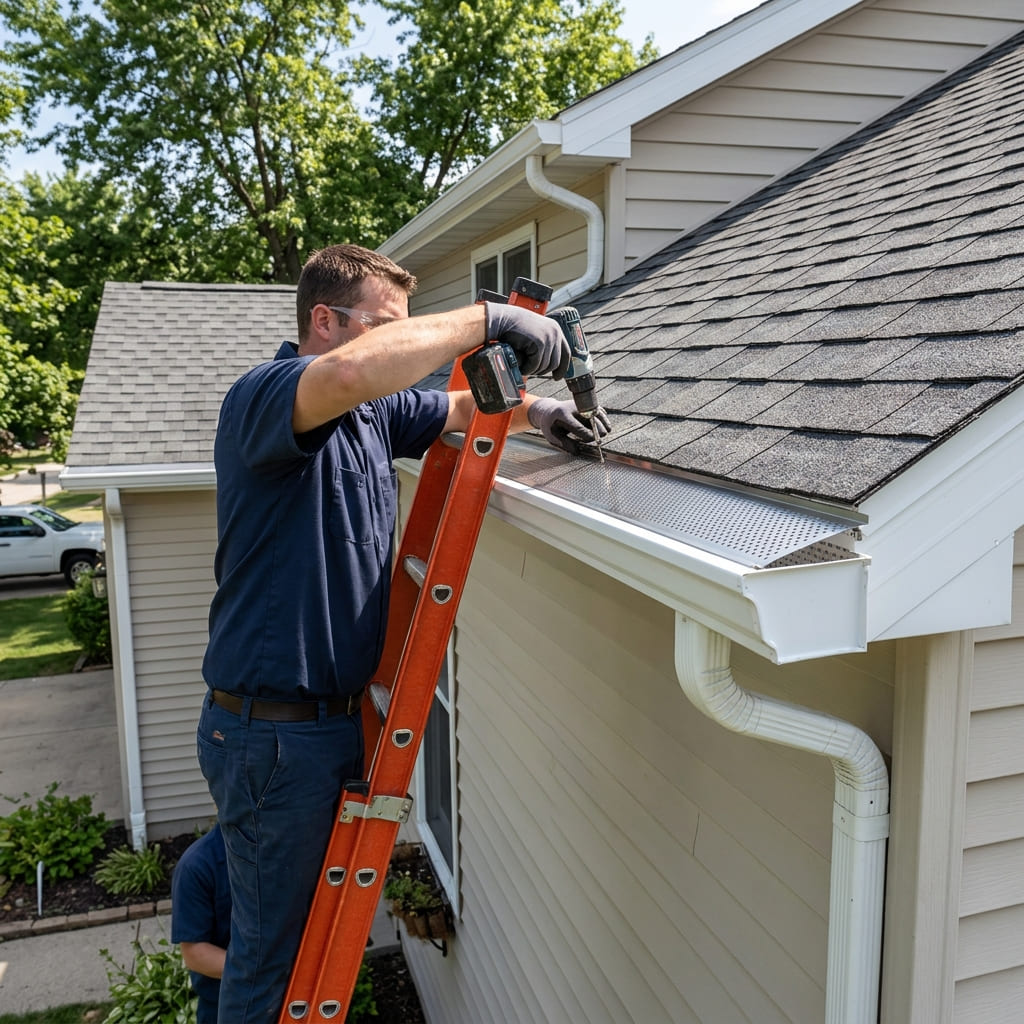
What makes Ann Arbor gutters different
Gutter problems in most cities start with weather. In Ann Arbor they start with trees. The city's older neighbourhoods sit under a dense canopy of oak, maple, linden and honey locust, and that canopy fills gutters faster and later in the year than almost anywhere else in the state.
The housing adds to it. Ann Arbor runs from 1840s and 1850s homes on the
Old West Side and in the Old Fourth Ward, to
early 20th-century four-squares and Craftsman houses in Burns Park,
to a large stock of mid-century modern homes in Ann Arbor Hills
and beyond.
Each of those needs a slightly different answer. A gutter that suits a 1960s ranch
on the south side can look wrong on a Greek Revival in a historic district, and
drain wrong on a low-slope modern roof.
Four Ann Arbor-specific problems worth knowing about
1. Late-dropping oaks. Many oaks hold their leaves well into winter and let them go in stages. A gutter cleaned in late October can be full again by Thanksgiving. Timing the fall clean for late November or early December, or booking two fall visits, is often the only way to go into winter with a clear trough.
2. A changing canopy. The emerald ash borer killed more than 10,000 ash trees in Ann Arbor in the 2000s. The replacement plantings are younger and more varied, which means a different mix of seed, leaf and twig coming down — and some streets that lost their ash now get more sun and less debris, while others are more shaded than ever.
3. Historic districts. Ann Arbor has fifteen local historic districts, ranging from a single property to several hundred. Exterior work on homes in districts like the Old West Side, Old Fourth Ward, Division Street and Broadway is reviewed by the Ann Arbor Historic District Commission or city staff on its behalf. Repairing in kind is usually simple. Changing the gutter style or material on a street-facing elevation needs approval.
4. Mid-century modern rooflines. Low-slope and flat roofs with wide overhangs are common in parts of Ann Arbor. They shed water slowly, sometimes through scuppers or internal drains, and a standard K-style gutter can look out of place on them. Work on these homes should be planned around how the roof actually drains.
The single most useful thing an Ann Arbor homeowner can check: look up at the gutter in early December. If it is already half full of oak leaves, the fall clean was too early — and that debris will freeze in place until spring.
The four gutter services in Ann Arbor
Almost every gutter call in Ann Arbor comes down to one of four jobs. Working out which one you need before you get a quote saves money. In a city with this much tree cover, a cleaning fixes more problems than people expect.
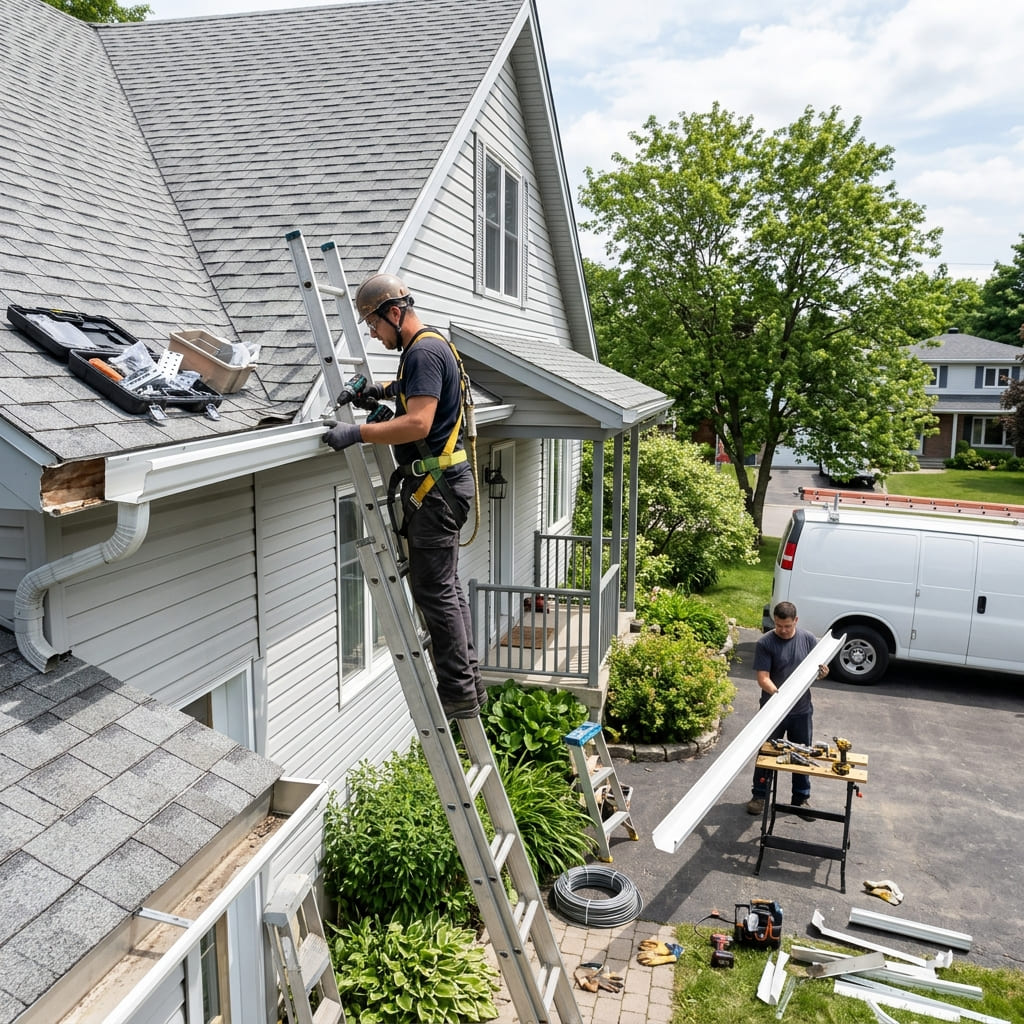
Gutter Installation in Ann Arbor
New gutter on a house that never had it, an addition, or after a re-roof.
Under heavy Ann Arbor canopy, 6-inch trough and 3x4 downspouts clog far less. On historic and mid-century homes, the look matters as much as the size.
Read the Ann Arbor installation page →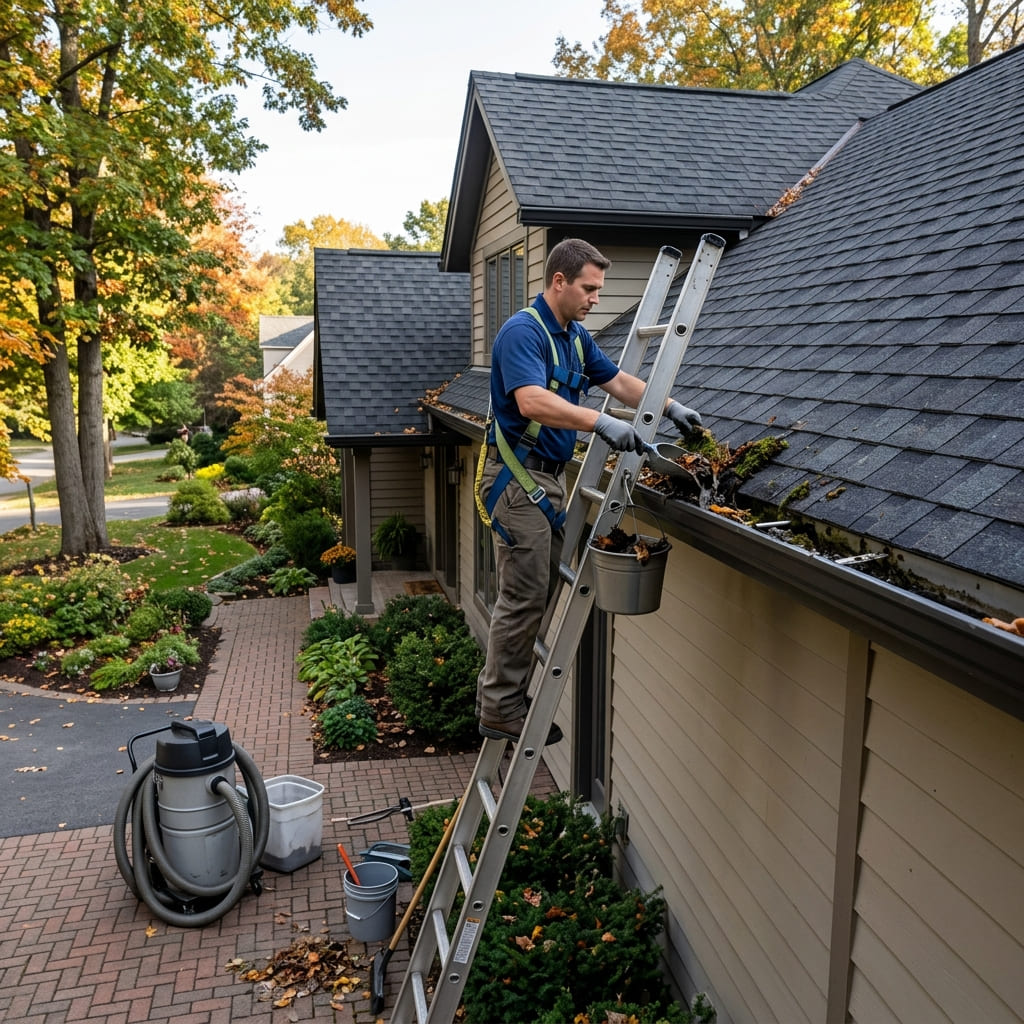
Gutter Cleaning in Ann Arbor
Clearing troughs, miters and downspouts by hand, two or three times a year.
The highest-value job in Ann Arbor. Oaks drop late — often into December — so the fall clean needs timing, and many homes need a third pass.
Read the Ann Arbor cleaning page →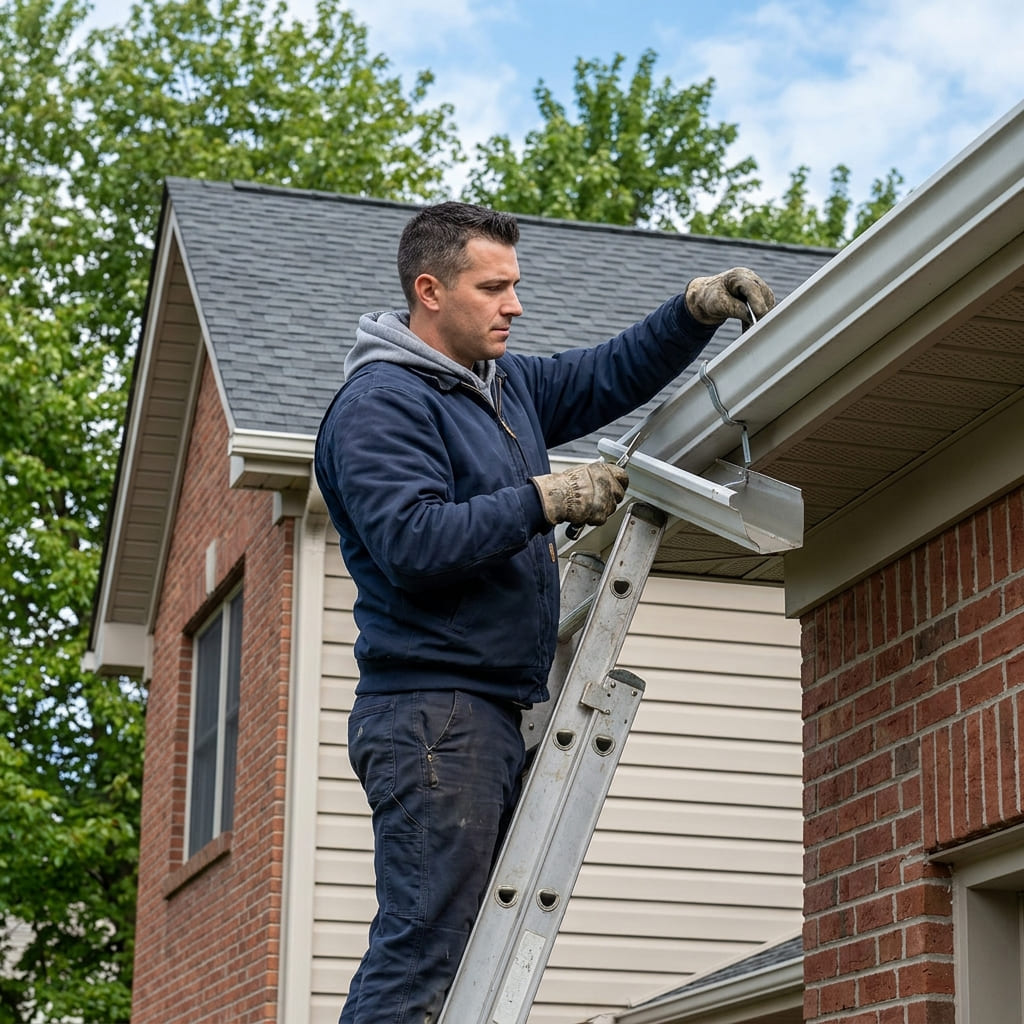
Gutter Repair in Ann Arbor
Overflowing corners, sagging runs, split seams, blocked downspouts.
Most Ann Arbor repairs start with debris: clogged outlets overflow, soak the fascia, and let hangers pull free. Check the board before anything else.
Read the Ann Arbor repair page →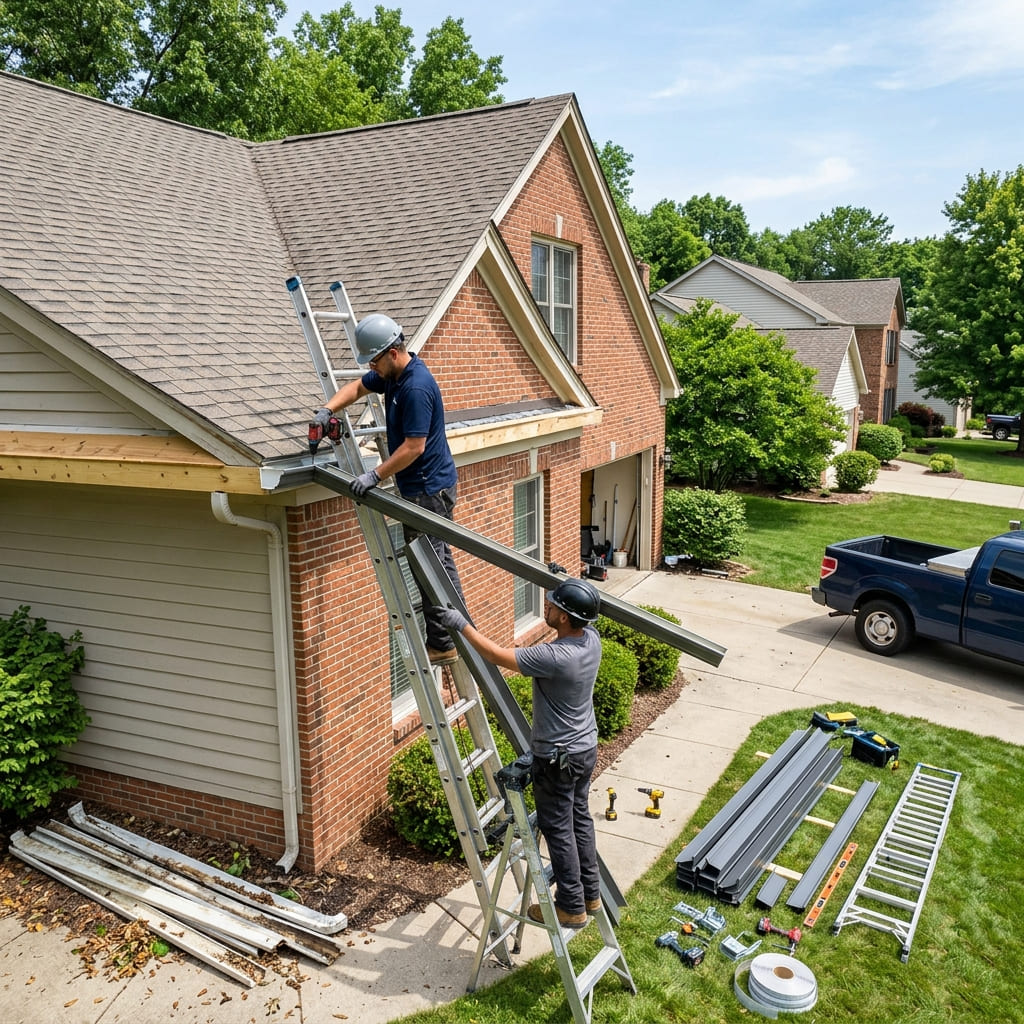
Gutter Replacement in Ann Arbor
Full tear-out and re-hang when repair stops being economical.
Often the time to size up for tree cover. Homes in the Old West Side, Old Fourth Ward and other local districts add a Historic District Commission step.
Read the Ann Arbor replacement page →Ann Arbor weather, and what it does to a gutter
The University of Michigan weather station, the official station for the city, averages about 61 inches of snow a year on 1991–2020 normals — noticeably more than Detroit. Annual precipitation runs in the mid-30s of inches.
Winter is about freeze-thaw. Ann Arbor swings above and below freezing many times each winter. Every thaw puts water in the trough; every freeze turns it to ice that expands inside seams, end caps and hanger holes. A gutter that went into winter full of leaves holds that water in place and makes it worse.
Spring and summer are about volume. Heavy storms dump a lot of
water in a short time, and a gutter half-full of seed and twigs cannot keep up.
Overflow at the front lip runs down the wall and soaks the soil right at the
foundation.
That pattern explains most Ann Arbor gutter failures: overflowing corners, split
end caps, sagging runs pulled down by ice-filled debris, and soft fascia behind
gutters that overflowed for years.
Where Ann Arbor roof water should go
Ann Arbor has spent years keeping clear water out of its sanitary sewers, including a footing drain disconnection program started in the early 2000s to cut basement backups. Roof water belongs on the lawn, in a rain garden, or in a properly built drain — never in the sanitary line.
The city also offers small stormwater credits for rain barrels, rain gardens, cisterns and dry wells. Routing downspouts into a rain garden, well away from the foundation, is both good drainage and worth a few dollars off the utility bill.
Ice dams, honestly explained
Ice dams form when heat leaks into the attic, melts snow on the upper roof, and the meltwater refreezes at the cold overhang. Gutters do not cause them, and new gutters will not stop them. The fix is attic air sealing, insulation and ventilation.
What gutters control is how bad it gets. A clean gutter gives meltwater an exit. One packed with frozen oak leaves holds water at the eave. That is the honest case for a well-timed gutter cleaning in Ann Arbor.
Ann Arbor gutter pricing at a glance
These are typical Ann Arbor ranges, not quotes. Every one moves with roof height, pitch, footage, tree cover, fascia condition and material.
| Job | Typical Ann Arbor range | What moves the number |
|---|---|---|
| Gutter cleaning, single storey | $140 – $225 | Footage, oak and maple cover, downspout clearing |
| Gutter cleaning, two storey | $200 – $350 | Ladder setup, pitch, dormers, how long since the last clean |
| Minimum repair service call | $175 – $275 | Travel plus a small fix — reseal, re-pitch, one downspout |
| Re-hang existing gutter | $9 – $16 / ft | Whether hangers can bite solid fascia |
| Fascia board replacement | $12 – $28 / ft | Rot extent, board profile, height, paint versus wrap |
| New 5" seamless aluminum | $9 – $15 / ft installed | Gauge, colour, downspouts, corners |
| New 6" seamless aluminum | $12 – $19 / ft installed | Larger trough, 3x4 downspouts, heavier hangers |
| Copper, half-round | $32 – $60+ / ft | Historic district work, soldered joints, material market |
A typical Ann Arbor ranch or bungalow carries roughly 120 to 170 feet of gutter. A two-storey Burns Park four-square or an Old West Side house with additions often carries more, much of it high and under trees.
Neighbourhoods covered in Ann Arbor
Coverage runs across the city and into the surrounding Washtenaw County communities. A few of the areas where gutter calls come in most often:
- Old West Side
- Water Hill
- Kerrytown
- Old Fourth Ward
- Northside
- Burns Park
- Lower Burns Park
- Ann Arbor Hills
- Eberwhite
- Lansdowne
- Georgetown
- Bryant
- Pittsfield Village
- Broadway
Coverage extends past the city line into Pittsfield Township, Scio Township, Ann Arbor Township, Saline, Dexter and Ypsilanti. Not sure whether your address is covered? Call 123-456-7890 with a cross street.
Choosing a gutter contractor in Ann Arbor
The checks below take about ten minutes and are worth doing on every job above a cleaning.
- Ask for a Michigan licence number and verify it. Michigan requires a residential builder or maintenance and alteration contractor licence for a great deal of exterior residential work. The Department of Licensing and Regulatory Affairs lets you check a licence yourself.
- Ask for a current certificate of insurance — general liability at minimum, and workers' compensation if anyone is working on your roof.
- Ask how they would size the system for your trees. Under heavy canopy, 6-inch trough and 3x4 downspouts are often worth it.
- Make them look at the fascia. Years of overflow from clogged gutters is the main cause of soft fascia in Ann Arbor.
- Get downspout locations and discharge in writing, including any rain garden or extension.
- For a historic district home, ask whether they have worked through the Historic District Commission before.
Michigan code points worth knowing
Gutters themselves are not generally required by residential code on a Michigan home. What is required is that surface water drains away from the foundation — the Michigan Residential Code calls for grading that falls away from the foundation wall, on the order of six inches of drop within the first ten feet.
A downspout that discharges at the wall works against that, no matter how good the gutter is. Extensions, splash pads and rain gardens are the practical answers.
For permit questions on your scope, the City of Ann Arbor's building services is the place to start, and the Historic District Commission is the second call if the home is in a local historic district.